Books I read

A small shelf of books that left something behind.

Not a complete library, and not a ranked list. I keep non-fiction and fiction separate because they leave different kinds of marks.

The shelf

23 books

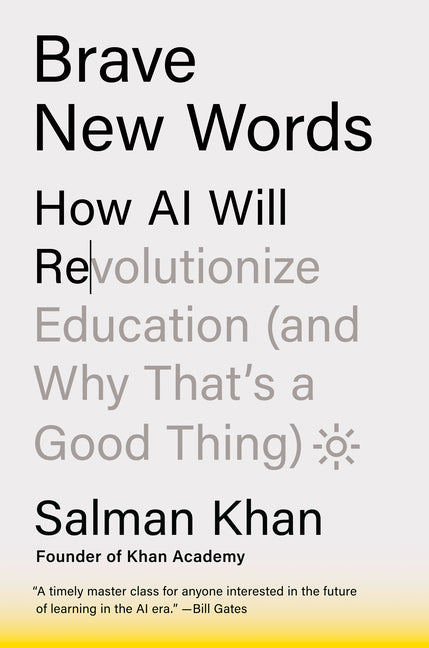
Cover of Brave New Words by Salman Khan

Salman Khan

Brave New Words

It belongs near the top because it connects AI to learning, agency, and access rather than treating the technology only as a workplace productivity story.

Read the full note

What it is about

A book about how artificial intelligence could reshape education, from personalized tutoring and classroom support to the wider social choices around learning in an AI age.

My comment

It belongs near the top because it connects AI to learning, agency, and access rather than treating the technology only as a workplace productivity story.

Cover of AI Engineering by Chip Huyen

Chip Huyen

AI Engineering

Useful because it treats AI as production engineering: not a demo, not a spell, but a system that has to be designed, measured, operated, and improved.

Read the full note

What it is about

A practical guide to building applications with foundation models, covering the engineering choices around prompting, retrieval, evaluation, fine-tuning, agents, latency, and cost.

My comment

Useful because it treats AI as production engineering: not a demo, not a spell, but a system that has to be designed, measured, operated, and improved.

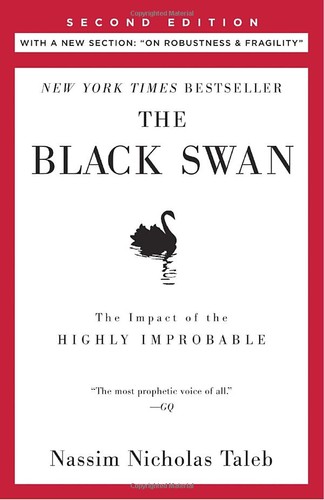
Cover of The Black Swan by Nassim Nicholas Taleb

Nassim Nicholas Taleb

The Black Swan

A useful antidote to overconfident planning: it keeps risk, fragility, and the unknown unknowns in the room when strategy starts sounding too tidy.

Read the full note

What it is about

An argument about rare, high-impact events, the limits of prediction, and the ways people build confident stories around uncertainty after the fact.

My comment

A useful antidote to overconfident planning: it keeps risk, fragility, and the unknown unknowns in the room when strategy starts sounding too tidy.

Cover of The Cold Start Problem by Andrew Chen

Andrew Chen

The Cold Start Problem

It is useful because it treats growth as a system design problem: value has to be sparked, concentrated, protected, and scaled before a network can stand on its own.

Read the full note

What it is about

A book about network effects, marketplaces, social products, and the early-stage challenge of getting enough users, supply, demand, or participation for a product to become valuable.

My comment

It is useful because it treats growth as a system design problem: value has to be sparked, concentrated, protected, and scaled before a network can stand on its own.

Cover of Loonshots by Safi Bahcall

Safi Bahcall

Loonshots

I like the bridge it builds between invention and structure: great ideas need imagination, but they also need systems that protect them before the evidence is comforta…

Read the full note

What it is about

A study of how organizations can nurture fragile, surprising ideas before they look obvious, using examples from science, business, war, and medicine.

My comment

I like the bridge it builds between invention and structure: great ideas need imagination, but they also need systems that protect them before the evidence is comfortable.

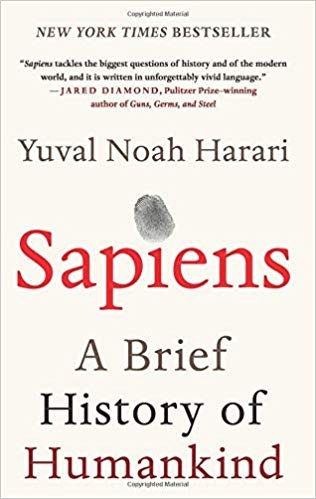
Cover of Sapiens by Yuval Noah Harari

Yuval Noah Harari

Sapiens

It works as a wide-angle lens: not every claim needs to be accepted whole, but the scale of the questions makes ordinary assumptions feel less fixed.

Read the full note

What it is about

A sweeping history of humankind, organized around the cognitive, agricultural, and scientific revolutions that changed how humans cooperate, imagine, and dominate the planet.

My comment

It works as a wide-angle lens: not every claim needs to be accepted whole, but the scale of the questions makes ordinary assumptions feel less fixed.

Cover of A Thousand Brains by Jeff Hawkins

Jeff Hawkins

A Thousand Brains

It helped me realize how our brain operates as a system: many models, predictions, corrections, and agreements working together to create what feels like one coherent…

Read the full note

What it is about

A neuroscience and intelligence book arguing that the neocortex builds many map-like models of the world, and that intelligence emerges from the interaction of those models rather than from one single central representation.

My comment

It helped me realize how our brain operates as a system: many models, predictions, corrections, and agreements working together to create what feels like one coherent understanding.

Cover of The Hard Thing About Hard Things by Ben Horowitz

Ben Horowitz

The Hard Thing About Hard Things

It stayed with me because it is really about resilience. Building anything serious requires staying functional when the situation is messy, imperfect, and emotionally…

Read the full note

What it is about

A founder and CEO field manual about the decisions that arrive when there are no clean answers: layoffs, fear, leadership pressure, broken plans, and the lonely parts of building a company.

My comment

It stayed with me because it is really about resilience. Building anything serious requires staying functional when the situation is messy, imperfect, and emotionally expensive.

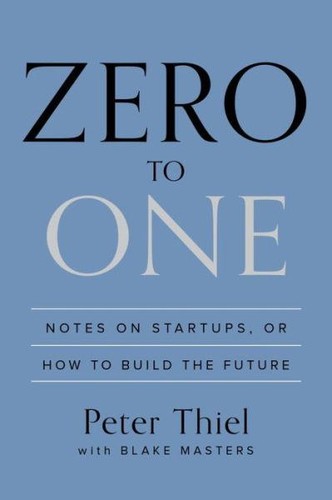
Cover of Zero to One by Peter Thiel with Blake Masters

Peter Thiel with Blake Masters

Zero to One

The restaurant-business point was the useful warning for me: a busy, visible market can still be structurally brutal if everyone is competing on the same thin margins.

Read the full note

What it is about

A startup book about creating something new rather than competing inside an existing category. Its core argument is that durable companies find non-obvious truths, build differentiated value, and avoid commodity competition.

My comment

The restaurant-business point was the useful warning for me: a busy, visible market can still be structurally brutal if everyone is competing on the same thin margins.

Cover of Steve Jobs by Walter Isaacson

Walter Isaacson

Steve Jobs

It helped me realize how much Jobs relied on feedback, not only intuition. The taste mattered, but so did the repeated confrontation with prototypes, people, objection…

Read the full note

What it is about

A biography built from interviews with Jobs and the people around him, tracing the product instincts, contradictions, intensity, and collaborations behind Apple, Pixar, and the products that reshaped personal technology.

My comment

It helped me realize how much Jobs relied on feedback, not only intuition. The taste mattered, but so did the repeated confrontation with prototypes, people, objections, and reality.

Cover of Find Your Why by Simon Sinek

Simon Sinek with David Mead and Peter Docker

Find Your Why

It helped me realize more about myself: what kind of work feels honest, what keeps me moving, and why choices feel stronger when the reason behind them is clear.

Read the full note

What it is about

A practical companion to Start With Why, focused on exercises and conversations that help people and teams discover the purpose behind their choices, work, and direction.

My comment

It helped me realize more about myself: what kind of work feels honest, what keeps me moving, and why choices feel stronger when the reason behind them is clear.

Cover of 100 Things Every Designer Needs to Know About People by Susan Weinschenk

Susan Weinschenk

100 Things Every Designer Needs to Know About People

A good reminder that design is not only aesthetics or taste. It is also a study of how real people notice, misunderstand, remember, choose, and act.

Read the full note

What it is about

A practical design psychology book about perception, attention, memory, motivation, decision-making, and the human patterns that shape how interfaces are experienced.

My comment

A good reminder that design is not only aesthetics or taste. It is also a study of how real people notice, misunderstand, remember, choose, and act.

Cover of Steal Like an Artist by Austin Kleon

Austin Kleon

Steal Like an Artist

I keep it as a permission slip for creative momentum: study what you love, transform it honestly, and keep your hands moving.

Read the full note

What it is about

A short, generous book about creative work, influence, remixing, constraints, habits, and the ordinary practices that help people keep making things.

My comment

I keep it as a permission slip for creative momentum: study what you love, transform it honestly, and keep your hands moving.

Cover of The Mythical Man-Month by Frederick P. Brooks Jr.

Frederick P. Brooks Jr.

The Mythical Man-Month

Still sharp because it names the human and communication costs inside software work, the parts that schedules like to hide until they become expensive.

Read the full note

What it is about

A classic set of essays on software project management, famous for its warning that adding people to a late software project often makes it later.

My comment

Still sharp because it names the human and communication costs inside software work, the parts that schedules like to hide until they become expensive.

Cover of The Selfish Gene by Richard Dawkins

Richard Dawkins

The Selfish Gene

The phrase "immortal coils" changed my theory about the world. It shifted my philosophical perspective from seeing life mostly through individuals to seeing patterns,…

Read the full note

What it is about

A gene-centered view of evolution. The book argues that organisms can be understood as temporary vehicles through which replicators persist, compete, and shape behavior across generations.

My comment

The phrase "immortal coils" changed my theory about the world. It shifted my philosophical perspective from seeing life mostly through individuals to seeing patterns, carriers, inheritance, and continuity.

Cover of The Castle by Franz Kafka

Franz Kafka

Currently reading

The Castle

Now reading. I am keeping it here as a live entry while I sit with Kafka's strange, bureaucratic world and the feeling of being trapped inside systems that never fully…

Read the full note

What it is about

Kafka's unfinished novel about K., a land surveyor trying to enter an inaccessible castle and understand the opaque authority that governs the village around it.

My comment

Now reading. I am keeping it here as a live entry while I sit with Kafka's strange, bureaucratic world and the feeling of being trapped inside systems that never fully explain themselves.

Cover of Letters to Milena by Franz Kafka

Franz Kafka

Letters to Milena

I keep it on the literature shelf because the letters read like an inner landscape: intimate, exposed, and full of the difficulty of reaching another person clearly.

Read the full note

What it is about

A collection of Kafka's letters to Milena Jesenska, written between 1920 and 1923, where affection, distance, illness, fear, and self-examination become inseparable.

My comment

I keep it on the literature shelf because the letters read like an inner landscape: intimate, exposed, and full of the difficulty of reaching another person clearly.

Cover of When Nietzsche Wept by Irvin D. Yalom

Irvin D. Yalom

When Nietzsche Wept

It belongs here for the way it turns ideas into emotional pressure: philosophy, pain, pride, dependence, and the possibility of being changed through conversation.

Read the full note

What it is about

A philosophical novel imagining a therapeutic encounter between Friedrich Nietzsche and Josef Breuer in nineteenth-century Vienna.

My comment

It belongs here for the way it turns ideas into emotional pressure: philosophy, pain, pride, dependence, and the possibility of being changed through conversation.

Cover of Red Dyed Hair by Kostas Mourselas

Kostas Mourselas

Red Dyed Hair

For me, the main character is really the narrator: not someone who simply envies his friend's life, but someone reflecting on his own indecision and the moments when h…

Read the full note

What it is about

A modern Greek novel centered on Emmanuel Retsinas, known as Louis, and the narrator's long relationship with his friend's unruly, provocative life.

My comment

For me, the main character is really the narrator: not someone who simply envies his friend's life, but someone reflecting on his own indecision and the moments when he did not change course.

Cover of Maya's Notebook by Isabel Allende

Isabel Allende

Maya's Notebook

It adds a more contemporary Allende to the shelf: survival, family history, danger, exile, and the slow work of becoming legible to yourself again.

Read the full note

What it is about

A contemporary novel about Maya Vidal, a young Chilean-American woman whose life unravels in Las Vegas before she hides on a remote island off Chile.

My comment

It adds a more contemporary Allende to the shelf: survival, family history, danger, exile, and the slow work of becoming legible to yourself again.

Cover of Norwegian Wood by Haruki Murakami

Haruki Murakami

Norwegian Wood

It belongs on the fiction shelf for its quiet sadness: the way memory keeps returning, not as nostalgia exactly, but as an unfinished conversation.

Read the full note

What it is about

A reflective novel about Toru Watanabe, memory, love, grief, youth, and the emotional aftershocks of relationships formed in late-1960s Tokyo.

My comment

It belongs on the fiction shelf for its quiet sadness: the way memory keeps returning, not as nostalgia exactly, but as an unfinished conversation.

Cover of Ines of My Soul by Isabel Allende

Isabel Allende

Ines of My Soul

What stayed with me was the brutality of conquest in Chile, especially against the local Indigenous people, and how personal ambition and empire can turn into devastat…

Read the full note

What it is about

A historical novel about Ines Suarez, the Spanish conquistadora connected with Pedro de Valdivia and the founding of Santiago in sixteenth-century Chile.

My comment

What stayed with me was the brutality of conquest in Chile, especially against the local Indigenous people, and how personal ambition and empire can turn into devastation for the people already there.

Cover of Junkermann by M. Karagatsis

M. Karagatsis

Junkermann

I am keeping it here under its English title because the book carries the energy of Greek modernism while moving through exile, ambition, class, appetite, and reinvent…

Read the full note

What it is about

The English edition of Karagatsis's Greek classic: a modernist, picaresque novel about Vasya Junkermann, a Finnish nobleman who flees revolution and reinvents himself in Greece.

My comment

I am keeping it here under its English title because the book carries the energy of Greek modernism while moving through exile, ambition, class, appetite, and reinvention.